
Quick answer
If your house feels humid while the AC is running, the system may be cooling the air without removing enough moisture. Start with the thermostat fan setting, air filter, vents, and visible drain-line warning signs. If humidity stays high or you see ice, water, warm air, breaker trips, or unusual noise, call a licensed HVAC contractor.
A common Naples complaint sounds like this: "The thermostat says 74, but the house still feels sticky." That can happen because temperature and humidity are different. Your AC must cool the air and remove moisture. A normal temperature does not always mean the indoor air is dry enough.
What should indoor humidity be in a Florida home?
Use a small humidity meter, also called a hygrometer, instead of guessing by how the room feels. For a simple homeowner target, try to keep indoor relative humidity below 60%.
The U.S. Environmental Protection Agency recommends keeping indoor humidity below 60%, ideally between 30% and 50%. University of Florida guidance for Florida homes describes 45% to 60% as an ideal range. Homes and occupants differ, but readings that stay above 60% deserve attention.
Why is my house so humid with the AC running?
1. The AC fan is set to ON instead of AUTO
With the fan set to ON, the blower keeps running after the compressor stops. Moisture left on the indoor coil can move back into the house. In humid Naples weather, AUTO is usually the better everyday setting because the fan stops when the cooling cycle stops.
2. A dirty filter is restricting airflow
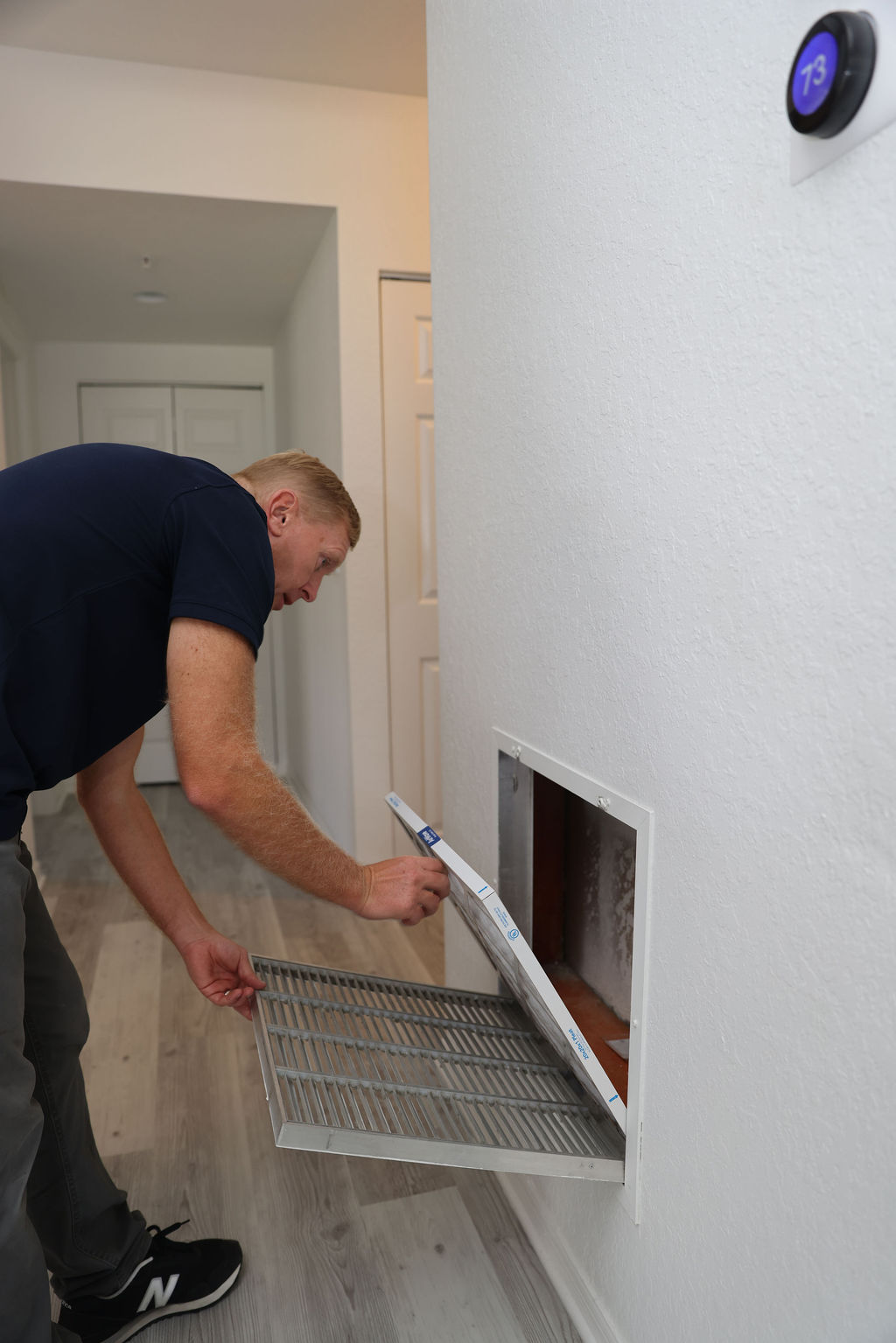
A dirty or incorrect filter can reduce airflow across the indoor coil. The home may cool unevenly, and moisture removal may suffer. Check that the filter is clean, correctly installed, and the right size for the system.
3. The AC is short cycling
Short cycling means the system starts and stops too quickly. It may cool the area near the thermostat before it runs long enough to remove moisture throughout the home. A filter problem, thermostat issue, blocked return, drain safety switch, equipment fault, or oversized system can contribute.
4. The condensate drain is slow or blocked
Your AC pulls moisture from the air and sends the water through a condensate drain. Algae and buildup are common in Southwest Florida. A slow or blocked drain can cause water near the air handler, float-switch shutdowns, musty odors, or repeated stops.
5. Supply or return vents are blocked
Furniture, boxes, rugs, dust, or closed vents can interfere with air movement. Walk through the home and make sure return grilles and supply vents are open and unobstructed. Do not open sealed equipment panels or reach into moving equipment.
6. Humid outdoor air is entering the home
Worn door seals, open windows, attic leaks, damaged weatherstripping, and leaky ducts can bring humid air inside. This is especially noticeable after heavy rain, during rental turnover, or when exterior doors are opened often.
7. The AC may be oversized or need mechanical service
An oversized system can cool the home quickly and shut off before removing enough moisture. Refrigerant problems, coil issues, blower problems, ductwork, and equipment sizing require a licensed HVAC contractor.
Safe checks you can do now
Check these first
- Set the thermostat fan to AUTO.
- Read the indoor humidity level.
- Check the filter and installation date.
- Open blocked supply and return vents.
- Use bathroom and kitchen exhaust fans.
Look for warning signs
- Water near the indoor unit.
- Musty smells or visible moisture.
- Ice on refrigerant lines or coils.
- Warm air or very weak airflow.
- Repeated starts, stops, or breaker trips.
Why does my house feel sticky at 74 degrees?
Because 74 degrees measures temperature, not moisture. Air at 74 degrees with high relative humidity can feel clammy. Lowering the thermostat may make the system run longer, but it will not fix a blocked drain, dirty filter, duct leak, incorrect fan setting, or mechanical problem.
Do I need a dehumidifier?
A dehumidifier can help when the AC is working correctly but indoor humidity still stays high. First rule out simple maintenance problems, water leaks, blocked drainage, and HVAC faults. A licensed HVAC contractor can determine whether a portable or whole-home dehumidifier is appropriate.
Need help with the small maintenance items?
QuoteHandyman can help with filter replacement, thermostat replacement, visible drain-line maintenance, and basic homeowner-level checks. Prices and online scheduling are handled on QuoteHandyman.com.
Frequently asked questions
Why is my house humid even though the AC is working?
The AC may be reaching the temperature setting without removing enough moisture. Check fan mode, filter condition, airflow, cycle length, drain condition, and possible entry points for humid outdoor air.
Is 60% humidity too high inside a Florida home?
A brief reading near 60% can happen during wet weather. Humidity that remains above 60% should be investigated, especially with condensation, musty odors, or visible moisture.
Can a dirty AC filter cause high humidity?
Yes, it can contribute by restricting airflow. Replace it with the correct filter and check whether airflow improves. Persistent high humidity may have another cause.
Should the AC fan be ON or AUTO in Florida?
AUTO is usually better for humidity control because the blower stops when the cooling cycle ends. ON can move moisture from the wet coil back into the home.
Will setting the AC lower remove humidity faster?
Not necessarily. It may increase runtime, but it does not repair airflow, drainage, duct, thermostat, or mechanical problems.
Sources
- U.S. EPA: A Brief Guide to Mold, Moisture and Your Home
- University of Florida IFAS: Energy Efficient Homes, Indoor Air Quality and Energy
- U.S. Department of Energy: Heat Pump Systems and Humidity Control
This article provides general homeowner information. Homes, systems, and repair requirements differ. QuoteHandyman performs minor maintenance within handyman scope; licensed HVAC work is referred to an appropriate contractor.